
 English
 Türkçe
Dental Veneers.
Understand how veneers differ from crowns, when conservative alternatives may help and what long-term care involves.
About the service.
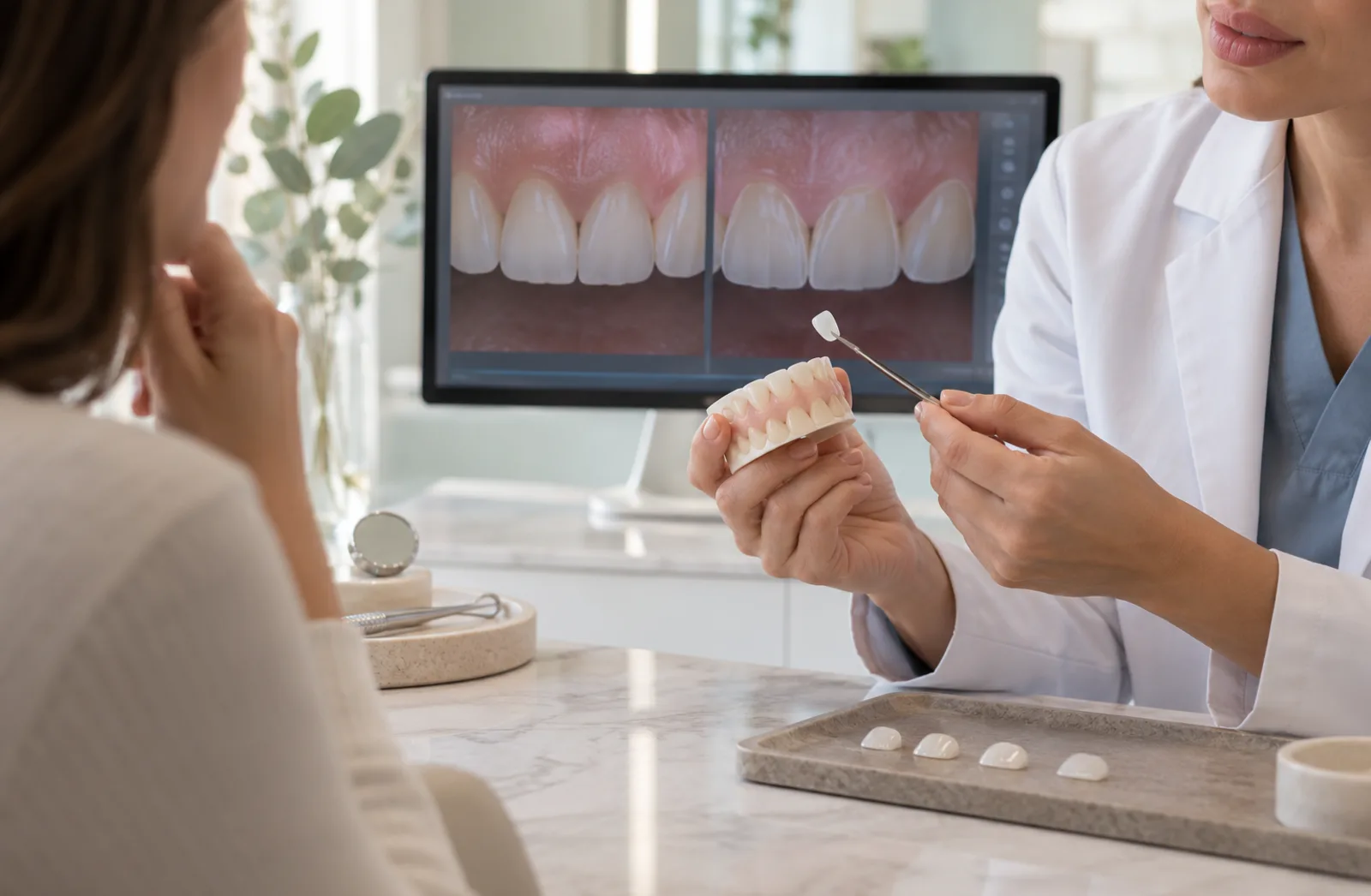
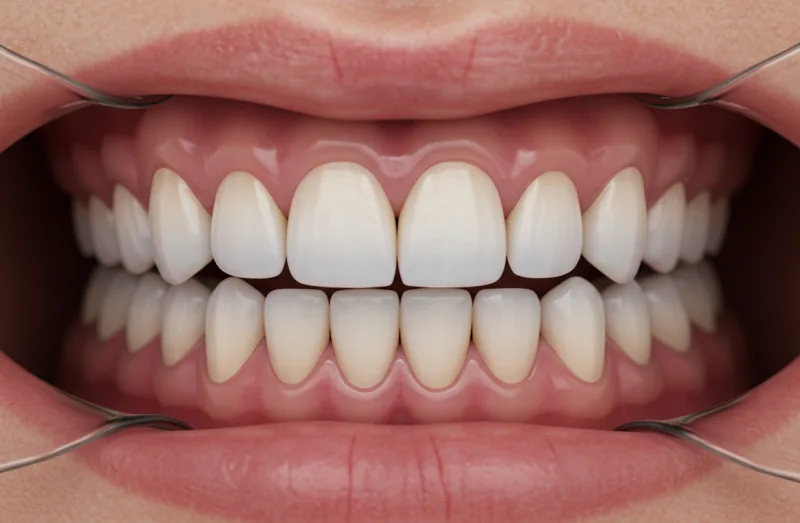
A dental veneer is a thin restoration bonded mainly to the front surface of a tooth. Veneers can change selected aspects of shape, colour or proportion, but they are not a replacement for treating decay, gum disease, major bite problems or every form of discolouration.
Dental decisions should connect diagnosis, function, preservation of healthy tissue and long-term maintenance. A remote conversation can clarify questions and records, but it cannot replace examination by the dentist responsible for treatment.
What an individual assessment should cover
Planning considers enamel, existing fillings, tooth position, bite, gum levels, colour, habits and the patient’s goals. The clinician should explain whether preparation is required and whether the proposed result can be achieved more conservatively.
An appropriate consultation should distinguish general education from a personal recommendation. Relevant medical or dental history, medicines, allergies, previous procedures and current symptoms should be shared securely with the treating provider rather than placed in advertising pixels or public messaging tools.
Approaches and alternatives
Professional whitening, composite bonding, orthodontic movement, a crown or no treatment may be alternatives. Composite and ceramic veneers differ in preparation, repairability, staining, laboratory stages and cost.
A useful plan explains why an approach is proposed, what reasonable alternatives exist and what may happen if treatment is postponed or declined. It should also identify which parts of the plan are provisional until direct examination.
Benefits, limits and risks
Veneers are not reversible when tooth tissue is removed. They can debond, chip, stain at margins or require replacement. They do not strengthen every compromised tooth, and a very bright or uniform result may look unnatural.
Risk is personal. The treating professional should discuss common and serious complications, factors that may increase risk, warning signs and the provider’s process for managing an unexpected outcome. Marketing language is not informed consent.
Recovery, follow-up and long-term care
Daily hygiene and professional review remain essential. Grinding, nail biting and hard objects can increase damage risk. Ask whether a protective appliance is relevant and how repairs will be managed after travel.
Recovery dates cannot be promised before an individual plan exists. Travel arrangements should remain flexible enough for required reviews, and a patient should know who to contact locally and internationally if recovery does not follow the expected course.
What affects the total cost?
The number of teeth, material, diagnostic previews, temporary work, laboratory design, gum or orthodontic preparation and follow-up affect cost. Compare the scope and preservation of healthy tooth structure, not just the per-tooth fee.
Ask for the treating provider’s written plan and a clear breakdown of included and excluded services. Flights, accommodation, transfers and coordination should be distinguished from clinical fees, medicines, tests, maintenance and possible future treatment.
Questions to take to the treating provider
- How much healthy enamel would be changed?
- Would whitening, bonding or orthodontics be less invasive?
- How will the proposed shapes be previewed?
- Can the material be repaired locally if it chips?
How Estelion coordinates the journey
Estelion Medical acts as a health-tourism intermediary and coordinator. With the visitor’s permission, the coordination team can help organise communication with an authorised healthcare provider, collect non-sensitive planning details, clarify appointment and travel logistics and explain which provider will make clinical decisions. Diagnosis, consent, treatment and clinical follow-up remain the responsibility of the licensed treating professionals and facility.
Before travelling, confirm the provider identity, the named clinician or responsible team, the provisional scope, the records still required, the expected local review period and the contact route for urgent concerns. Do not rely on a social-media promise or an image of another person’s outcome as evidence that the same plan is suitable for you.
Independent background sources
These links provide general patient information. They do not endorse Estelion or replace advice from the treating provider.
The information provided here is of a general nature; it is not a substitute for a personalised assessment by a healthcare professional.
How does the coordination process work?
Tell us what you need
Complete a brief preliminary application without sharing any sensitive health information.
Let’s discuss the options
Our coordinator can explain the process and arrange for an appropriate professional assessment.
Plan your journey
Find out about dates and travel details based on current availability.
Frequently Asked Questions
01Are veneers the same as crowns?+
No. Veneers usually cover mainly the front surface; crowns cover substantially more tooth structure.
02Are “no-prep” veneers suitable for everyone?+
No. Tooth position, colour, shape, bite and desired volume determine whether minimal or no preparation is realistic.
03Can veneers correct every crooked tooth?+
No. Orthodontic treatment may be safer or more predictable for position and bite problems.
04Do veneers need replacement?+
They may require repair or replacement over time; longevity varies with material, bite, hygiene and habits.
Our areas of expertise

ESTELION
Partner healthcare organisations



Let’s start by getting to know each other.
A few quick questions will help us find the best way to get in touch with you.